
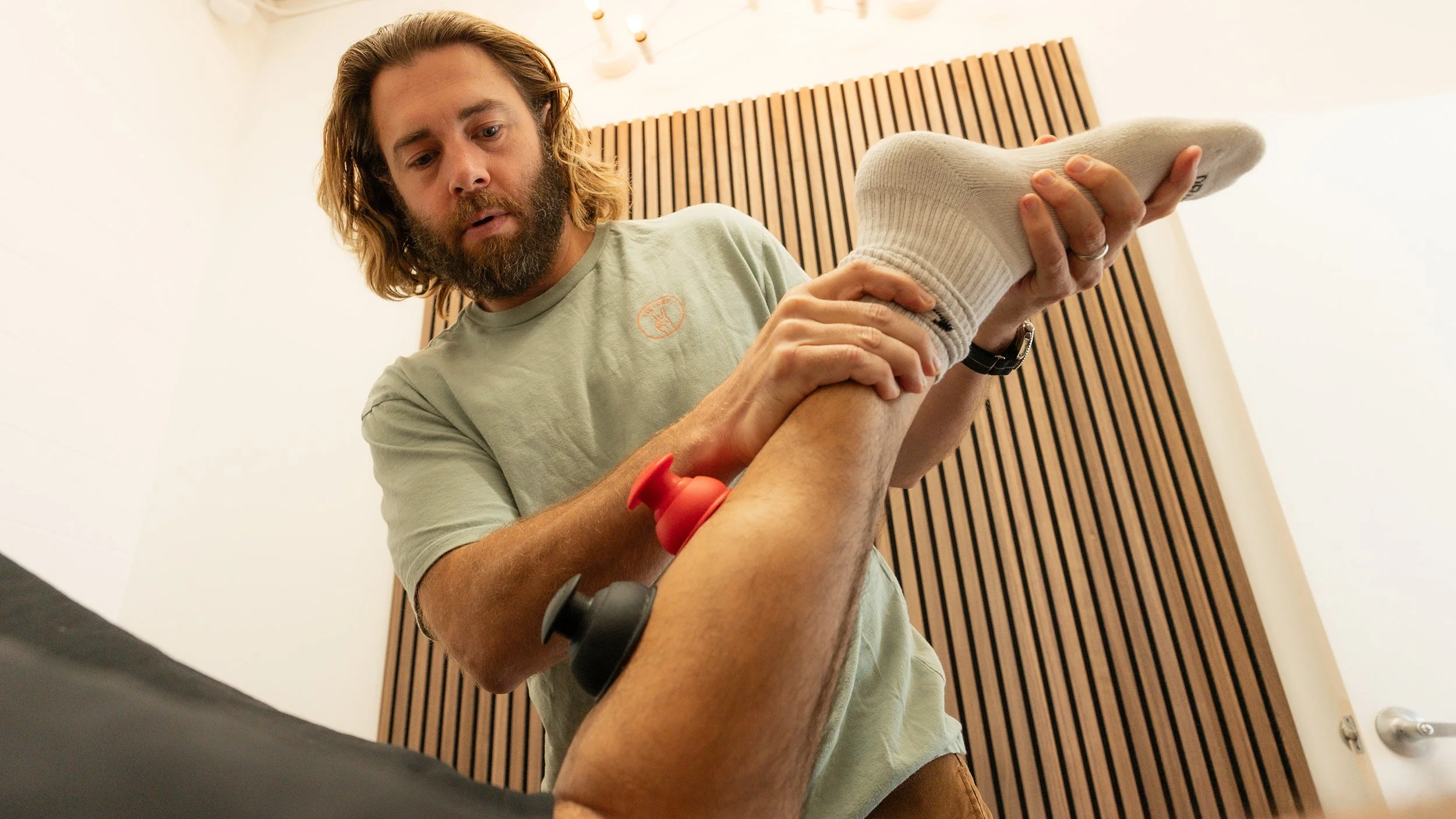
Physical Therapy for Ankle Pain in Los Angeles
Ankle pain shouldn't keep you from running in Kenneth Hahn Park, training at your gym, or simply walking without worry. Whether you're dealing with a recent sprain, chronic instability, or stubborn Achilles tendinopathy, Victory Performance and Physical Therapy specializes in evidence-based ankle rehabilitation that gets active adults and athletes back to full function.
At our Mar Vista clinic, every ankle pain patient works one-on-one with a Doctor of Physical Therapy who understands that your ankle is more than just a joint,it's the foundation of every step, jump, and pivot you make.
Call 424-543-4336 to schedule your evaluation and learn more about how we may be able to help.
This is why we do it
5000+ PEOPLE OUT OF PAIN
950+ SURGERIES AVOIDED
750+ 5-STAR REVIEWS
Located in Los Angeles|| Serving
Active Adults & Athletes Since 2015
What Makes Victory's Ankle Rehabilitation Different
-
Every session is with a licensed Doctor of Physical Therapy—never an aide or assistant. You receive a full hour of personalized attention, ensuring your treatment is precisely tailored to your specific condition and adjusted based on your daily progress. goes here
-
We base our treatment on the latest clinical research, not outdated methods. Clinical guidelines from the American Physical Therapy Association mandate physical therapy as the first-line treatment for hip pain. Studies consistently show that targeted exercise programs reliably improve function and strength, leading to lasting pain relief.
-
We understand that Culver City's active community doesn't want to just "manage" pain—you want full restoration of function. Our therapists are trained in advanced hip rehabilitation techniques and have experience helping everyone from weekend warriors to professional athletes return to peak performance.
-
For stubborn ankle conditions that resist traditional treatment, we offer cutting-edge interventions like shockwave therapy. This non-invasive treatment stimulates healing and tissue regeneration, often providing breakthroughs when other approaches have reached a plateau.
-
For athletes, we don't clear you based on how you feel—we use objective testing. Before you return to competition, you'll complete comprehensive assessment across five domains: pain tolerance, ankle impairments (strength, ROM, power), athlete perception (confidence and psychological readiness), sensorimotor control (balance and proprioception), and sport-specific performance (hopping, agility, sport drills).
-
In California, you can see a physical therapist directly without a doctor's referral. This means you can start your recovery immediately instead of waiting weeks for appointments and approvals. Our Doctors of Physical Therapy are trained to evaluate your condition and determine the most appropriate treatment approach.
"After working with Jared at Victory, I was able to roll my ankle recovery into training for the LA Marathon. They were able to schedule me promptly and built a treatment plan that got me rapidly improving." — Richa P.
Why Ankle Pain Needs Specialized Physical Therapy
Ankle injuries are among the most common musculoskeletal problems, particularly for runners, basketball players, and weekend warriors. But here's what most people don't know: up to 40% of ankle sprains lead to Chronic Ankle Instability if not properly rehabilitated. Even more concerning, inadequate treatment increases your risk of developing post-traumatic ankle osteoarthritis years down the road.
The difference between a full recovery and chronic problems often comes down to the quality of your rehabilitation. Research published in 2025 confirms that specialized physical therapy provides significantly better pain relief and faster recovery compared to conventional "rest and ice" approaches.
Common Ankle Conditions We Treat:
-
You rolled your ankle during a pickup game or stepped wrong off a curb. Now it's swollen, painful, and you're wondering if you need an X-ray or just rest.
Our approach: Early functional rehabilitation beats prolonged immobilization every time. We start with hands-on manual therapy to reduce swelling and restore mobility, then progress through targeted strengthening and proprioceptive training. Studies show that patients who begin physical therapy early return to work and activity significantly faster than those who simply rest and wait.
One study found patients receiving PT had pain scores that improved by an average of 1.82 points more than conventional care on a 10-point scale—a clinically meaningful difference you'll feel with every step.
-
Your ankle feels unstable. It "gives way" unexpectedly. You've sprained it multiple times, and now you're constantly worried about rolling it again during runs or even just walking on uneven ground.
Our approach: Chronic Ankle Instability isn't just about weak muscles—it's a sensorimotor problem. Your brain has lost its ability to automatically stabilize your ankle. We prioritize specialized balance training and neuromuscular re-education that research shows is superior to strength training alone for resolving instability.
A 2024 meta-analysis confirmed that dedicated balance training significantly improves both instability symptoms and functional performance in ways that isolated strengthening cannot match. We use progressive balance challenges, perturbation training, and sport-specific drills to retrain the neural pathways your ankle needs for automatic stability.
-
Your Achilles tendon hurts. Maybe it's the back of your heel (insertional tendinopathy) or higher up in the tendon itself (midportion tendinopathy). You've tried rest, but the pain keeps coming back when you return to running or exercise.
Our approach: We start by determining the exact location and type of your tendinopathy, because the treatment differs significantly. For midportion Achilles tendinopathy, we use progressive heavy-load strengthening at least three times per week—the gold standard backed by clinical practice guidelines.
For insertional Achilles tendinopathy, we implement a specialized Low-Tendon Compression Rehabilitation protocol. A 2025 randomized controlled trial showed this approach—which uses heel lifts, avoids deep calf stretching, and focuses on tensile rather than compressive loading—produces significantly better outcomes than traditional protocols. Patients following this specialized program reported 94.7% satisfaction and clinically meaningful improvements that lasted.
-
You have sharp pain in the bottom of your heel, especially with your first steps in the morning or after sitting for a while. Running or even walking has become increasingly painful, and you're worried this stubborn condition will never go away.
Our approach: Plantar fasciitis responds well to physical therapy, but it requires a comprehensive strategy that addresses both the plantar fascia itself and the biomechanical factors causing excessive stress. We don't just give you a tennis ball to roll your foot on—we identify why your plantar fascia is overloaded in the first place.
Our treatment targets multiple contributing factors: weak intrinsic foot muscles that fail to support your arch, tight calf muscles that increase heel cord tension, poor ankle mobility that alters your gait, and weak hip and glute muscles that cause compensatory foot mechanics. We use manual therapy to reduce fascial tension, progressive strengthening to build foot and lower leg capacity, and gait retraining to distribute forces more effectively.
"I came to Victory with severe plantar fasciitis from marathon training. After working with CJ for about 2.5 months, my plantar fasciitis has subsided, even as I've rebuilt high volume mileage for my next marathon." — Johanna W.
-
You've had ankle surgery—whether it's ligament reconstruction, fracture repair, or tendon work—and you need expert guidance to regain full function.
Our approach: We work closely with orthopedic surgeons throughout the LA area to follow your post-operative protocol while pushing your recovery as aggressively as safely possible. Our DPTs understand surgical anatomy and healing timelines, progressing you through range of motion, strengthening, and return-to-sport phases with precision.
-
Your ankle or foot hurts, but you can't pinpoint when it started or what caused it. You've seen multiple providers who haven't been able to identify the problem. The pain comes and goes, changes locations, or simply won't respond to the treatments you've tried.
Our approach: Unexplained ankle and foot pain often stems from compensatory patterns and biomechanical dysfunction that develop gradually over time. During your comprehensive evaluation, we look beyond the site of pain to examine how your entire body moves and loads your foot and ankle.
We frequently find that chronic ankle pain originates from upstream issues—weak hips causing altered landing mechanics, poor core stability affecting single-leg balance, limited ankle mobility forcing compensation through the foot, or old injuries that changed how you move. Our Doctors of Physical Therapy are trained to connect these dots and identify movement dysfunction that other providers miss.
Through detailed movement assessment, we uncover the mechanical stress patterns causing your pain. Then we systematically address each contributing factor—restoring mobility where you're stiff, building strength where you're weak, and retraining movement patterns that have become ingrained over months or years.
"I had been dealing with foot and ankle issues for months with no clear diagnosis. Victory took the time to really assess my movement and found weakness patterns I didn't even know existed. Within weeks, pain I'd had for months started improving." — Hunter L.
-
Your ankle joint feels stiff and achy, especially in the morning or after periods of rest. You may have had a severe ankle injury years ago that's now catching up with you.
Our approach: Physical therapy is the recommended first-line treatment for ankle osteoarthritis. We create individualized programs targeting the muscles around your ankle, address mobility restrictions, and teach load management strategies. This includes guidance on footwear modifications and orthotics that can significantly reduce joint stress during daily activities.
The Victory Method for Ankkle Pain
At Victory Performance and Physical Therapy, we don't just treat your ankle—we identify and fix the underlying biomechanical issues that caused your pain in the first place. Our approach goes beyond symptom management to address the root causes that keep ankle problems coming back.
-
Your ankle pain rarely exists in isolation. We conduct a full kinetic chain evaluation examining your hip strength, core stability, foot mechanics, and movement patterns. Weak glutes can alter your landing mechanics. Poor core control affects your balance. Tight calves increase Achilles strain. We identify these connections during your initial 55-minute evaluation.
Our Doctors of Physical Therapy assess:
Ankle range of motion and joint mobility
Muscle strength throughout your leg and hip
Balance and proprioception deficits
Movement quality during functional activities
Gait patterns and sport-specific mechanics
This comprehensive approach ensures we're treating the cause of your ankle pain, not just the symptoms.
-
Every session at Victory includes skilled manual therapy techniques to restore proper joint mechanics and tissue mobility. We use:
Joint Mobilizations: Gentle, specific movements to restore normal ankle joint motion and reduce stiffness
Soft Tissue Work: Targeted techniques to address muscle tension, fascial restrictions, and scar tissue that limit your recovery
Neuromuscular Re-education: Hands-on guidance to retrain proper movement patterns and ankle control
This isn't passive treatment—our DPTs actively work on your ankle to accelerate healing, reduce pain, and prepare your tissues for the strengthening work ahead.
-
Ankle rehabilitation requires progressive overload, not generic exercises. We build strength through the entire kinetic chain:
Intrinsic Foot Strengthening: Building the small stabilizers that support your arch and ankle
Calf Complex Training: Progressive loading of both your gastrocnemius and soleus muscles using evidence-based protocols
Hip and Glute Activation: Strengthening the proximal control that protects your ankle during dynamic activities
Single-Leg Stability Work: Functional strength that translates directly to walking, running, and sports
For Achilles tendinopathy, we implement high-load progressive resistance at least three times per week—the research-backed standard. For insertional tendinopathy, we use our specialized low-compression protocol with heel lifts and modified loading strategies that research shows produces superior outcomes.
-
This is where most physical therapy falls short, but it's arguably the most critical component for preventing re-injury. Your ankle contains thousands of mechanoreceptors that communicate with your brain about joint position and movement. After an injury, these neural pathways become impaired.
We systematically retrain these pathways through:
Progressive balance challenges on various surfaces
Perturbation training to improve reactive stability
Eyes-closed exercises to enhance proprioceptive awareness
Sport-specific balance drills under fatigue
Research confirms that dedicated balance training is superior to strength training alone for resolving chronic ankle instability. We don't skip this crucial step.
-
How you move matters. Poor mechanics during running, jumping, landing, and cutting place excessive stress on your ankle and increase re-injury risk.
We analyze and correct:
Running gait and foot strike patterns
Landing mechanics from jumps
Cutting and pivoting technique
Stair negotiation and uneven terrain navigation
Using video analysis and real-time feedback, we help you develop movement patterns that protect your ankle while maximizing performance.
-
Before we clear you for full athletic participation, you must pass objective criteria across five domains—the internationally recognized PAASS Framework. We test:
Pain tolerance during high-load activities
Ankle impairments including strength, range of motion, and power
Athlete perception including confidence and psychological readiness
Sensorimotor control through balance and proprioception testing
Sport performance via hopping, agility drills, and sport-specific movements
You don't return to your sport based on how you feel or a calendar date. You return when objective testing confirms you're physically and mentally prepared to perform safely.
What to Expect During Your Care
Your First Visit
In-depth evaluation with a Doctor of Physical Therapy who takes time to understand your complete story
Functional movement assessment—we watch how you walk, squat, balance, and perform activities that provoke your symptoms
Manual examination of joint mobility, muscle flexibility, and tissue quality
Clear explanation of what we find and why you're experiencing pain
Customized treatment plan with realistic timeline and measurable goals
Typical Timeline
Most patients notice meaningful improvement within the first 2-4 weeks of treatment, with more significant changes occurring over 4-6 weeks. Acute injuries like hip flexor strains may resolve in 4-6 weeks. Chronic conditions—arthritis, tendinopathy, or long-standing groin pain—typically require 3-6 months of consistent work to achieve lasting improvement.
The key is consistency. Patients who commit to both in-clinic sessions and home exercises see dramatically better outcomes than those expecting passive treatment to "fix" them.
Schedule Your Ankle Pain Evaluation Today
If you're in Culver City, West LA, Mar Vista, Palms, or the surrounding Los Angeles area, don't let ankle pain limit your life another day. Whether you're a runner training for your next race, a weekend athlete trying to stay active, or someone who just wants to walk without worry, we can help.
Victory Performance and Physical Therapy specializes in getting active adults back to pain-free movement using proven, evidence-based protocols that address the root cause of your ankle problems.
Want to know if Victory can help? Give us a call
OR
Fill out the form and we will get back to you
Located on the West side, Victory Performance and Physical Therapy proudly serves patients throughout Los Angeles, including Culver City, West LA, Santa Monica, Venice, Marina del Rey, and surrounding communities.
Additional Services
Shockwave Therapy
This advanced treatment may help accelerate healing in stubborn injuries by stimulating blood flow and tissue repair. We use it as part of a targeted plan when traditional methods haven’t been enough.
Sports Massage
Our therapeutic massage combines movement with deep tissue techniques, targeting problem areas more effectively than traditional massage while potentially enhancing recovery and flexibility..
Personal Training
Once you've achieved your initial goals, our personal training programs may help you build strength safely, taking your history and fitness goals into account for continued progress.
Frequently Asked Questions
-
For acute sprains, many patients see significant improvement within 4-6 weeks of consistent therapy. Chronic instability typically requires 8-12 weeks of specialized balance training. Achilles tendinopathy usually needs 12-16 weeks of progressive loading. Your exact timeline depends on your specific condition, injury severity, and how consistently you complete your home exercises.
-
No referral needed. California law allows direct access to physical therapy, meaning you can schedule an evaluation without seeing a doctor first. We accept most insurance plans and can help you verify your coverage.
-
Yes. Research consistently shows that specialized physical therapy—particularly balance training and neuromuscular re-education—is highly effective for resolving chronic instability symptoms. The key is working with a PT who understands the sensorimotor nature of the problem and implements evidence-based protocols, not just generic strengthening exercises.
-
Prolonged rest and immobilization after an ankle sprain can actually slow your recovery and increase your risk of chronic problems. Physical therapy emphasizes early, controlled movement that promotes healing while preventing stiffness and maintaining strength. Studies show PT patients recover faster and have better long-term outcomes than those who simply rest.
-
Most ankle conditions respond well to conservative physical therapy management. Surgery is typically considered only after exhausting conservative options or in cases of severe structural damage. Our DPTs work closely with orthopedic specialists throughout LA and can help guide you toward the right decision for your specific situation.
-
Certain ankle injuries require immediate medical evaluation before beginning physical therapy. Seek emergency care or see a physician immediately if you experience:
Inability to bear any weight on the ankle
Severe swelling that develops rapidly within the first hour
Obvious deformity or abnormal positioning of the ankle or foot
Severe pain that doesn't improve with rest and ice
Numbness, tingling, or coldness in your foot
Skin that appears pale, blue, or mottled
Open wounds or bone visible through the skin
These symptoms may indicate a fracture, dislocation, severe ligament tear, or vascular injury that requires imaging and medical management. Once you've been medically cleared, our team can work with your physician to begin appropriate rehabilitation. For ankle pain that develops gradually or persists after initial rest, physical therapy evaluation is an excellent first step.
The Science Behind Our Approach
Our ankle rehabilitation protocols aren't based on tradition or guesswork—they're grounded in the latest peer-reviewed research from leading sports medicine and orthopedic journals.
Early mobilization beats prolonged rest: A 2025 systematic review and meta-analysis published in PMC analyzed ten randomized controlled trials and found that physical therapy provides significantly lower post-treatment pain scores compared to conventional care for acute ankle sprains. Patients receiving PT experienced meaningful improvements in pain that translated to faster return to work and daily activities.
Balance training is essential for chronic instability: A 2024 meta-analysis in PMC demonstrated that dedicated balance training produces significantly better outcomes than strength training alone for chronic ankle instability. Patients showed substantial improvements on both the Chronic Ankle Instability Tool scores and functional performance measures, confirming that sensorimotor retraining—not just strengthening—is critical for resolving instability.
Specialized protocols for Achilles tendinopathy work: The 2024 Clinical Practice Guideline published in the Journal of Orthopaedic & Sports Physical Therapy establishes that tendon loading exercise, performed at least three times per week at loads as high as tolerated, is the gold standard treatment for Achilles tendinopathy. For insertional tendinopathy specifically, a 2025 randomized controlled trial in the British Journal of Sports Medicine showed that a Low-Tendon Compression Rehabilitation protocol produces significantly superior outcomes compared to traditional approaches, with 94.7% patient satisfaction.
High-dose exercise delivers results: Research published in JMIR Rehabilitation demonstrated that digitally-supported exercise programs for ankle sprains—averaging 2.4 hours per week—produced clinically meaningful improvements in both pain (49.8% reduction) and functional ability (151.8% increase in sports scores) at six months. This confirms that consistent, progressive exercise is the key to lasting recovery.
Objective return-to-sport criteria prevent re-injury: The 2021 international consensus statement published in the British Journal of Sports Medicine established the PAASS Framework as the standard for athletic clearance after ankle sprains. This multi-domain assessment—covering pain, impairments, athlete perception, sensorimotor control, and sport performance—ensures athletes are truly ready to compete safely, addressing the high recurrence rates (up to 47% in some sports) seen with premature return.
This research foundation ensures your treatment is based on proven methods that work, not outdated protocols or personal preferences. When you choose Victory, you're receiving care that reflects the current scientific consensus on optimal ankle rehabilitation.