
Shoulder Pain and Physical Therapy in Culver City
Not all shoulder pain requires surgery. But ignoring it? That’s how small issues turn into long-term problems.
Whether you tweaked your shoulder during overhead presses, felt a pinch while reaching behind the car seat, or started noticing pain out of nowhere, the underlying cause is often a mix of movement breakdowns, strength imbalances, and repetitive stress. At Victory Performance and Physical Therapy in Culver City, we help active adults get to the root of their shoulder pain—so they can fix it for good and keep moving without fear.
Why Shoulder Pain Is So Common in Active Adults
The shoulder joint is incredibly mobile—and that makes it vulnerable.
It’s a ball-and-socket joint supported by a complex network of muscles, tendons, and ligaments. Structures like the rotator cuff, deltoid, labrum, and scapular stabilizers must work in harmony to keep the shoulder functional. When even one part underperforms, others are forced to compensate. Over time, this compensation causes joint stress, poor mechanics, and inflammation.
Factors that commonly lead to shoulder pain include:
• Poor posture (especially from hours at a desk or driving)
• Muscle imbalances between the chest, back, and rotator cuff
• Weakness or poor control in the scapular stabilizers
• Repetitive overhead motion (seen in lifters, swimmers, climbers)
• Faulty form during exercise or manual labor
Most clients we see at Victory don’t have a single injury event—they have patterns that caught up with them. That’s why diagnosis alone isn’t enough. You need movement evaluation and targeted correction.

Neck tension and shoulder discomfort often overlap, making it important to evaluate both when diagnosing shoulder pain.
What Shoulder Pain Feels Like
The symptoms you feel depend on which structures are irritated. You might notice:
A dull, achy sensation deep in the shoulder—often from rotator cuff overload
Pain with overhead movement, behind-the-back reaching, or sleeping on your side—often due to impingement or biceps tendon irritation
Sharp pain with lifting, pulling, or carrying—potential tendon or labral involvement
Radiating pain into the neck, upper back, or arm—possible nerve sensitivity or scapular dysfunction
These symptoms are often misunderstood or mismanaged with ice, rest, or online stretches. But shoulder issues rarely resolve fully without addressing their root cause.
When to See a Physical Therapist
California law allows direct access to physical therapy—you don’t need a referral.
If your shoulder pain has:
• Lasted more than 2 weeks
• Worsened with activity
• Caused reduced strength or range of motion
• Interrupted your sleep or limited daily tasks
…you should be evaluated.
At Victory Performance and Physical Therapy, we use a hands-on, movement-based approach. That means we don’t just identify the painful structure—we figure out what’s not working around it, and what’s putting it at risk. From weekend warriors to CrossFit athletes to working professionals, we help people across Culver City resolve the issue and return stronger.
Common Shoulder Conditions We Treat
Victory specializes in diagnosing and treating complex shoulder dysfunction, including:
• Rotator cuff tendinopathy and partial tears
• Subacromial impingement syndrome
• Labral tears and instability
• Biceps tendonitis and SLAP lesions
• Adhesive capsulitis (frozen shoulder)
• Postural and scapular control dysfunction
• Overuse injuries in lifters, swimmers, climbers, and overhead athletes
• Referred pain from cervical or thoracic involvement
We also help individuals recover post-operatively or after unresolved care elsewhere. If something feels “off” in your shoulder, our team can evaluate what’s contributing and chart a plan forward.
Real Stories From Clients With Shoulder Pain
Clients consistently share how Victory helped them find lasting relief—even after other approaches failed.
What to Expect From Shoulder Physical Therapy at Victory
Every shoulder is different—but great care always starts with a great evaluation.
Your first visit includes:
• Functional assessment of shoulder mobility and joint alignment
• Testing for scapular strength and neuromuscular control
• Postural analysis and thoracic mobility testing
• Evaluation of functional strength in pressing, pulling, and overhead patterns
• Orthopedic testing to screen for rotator cuff, labral, or biceps tendon issues
From there, your treatment plan may include:
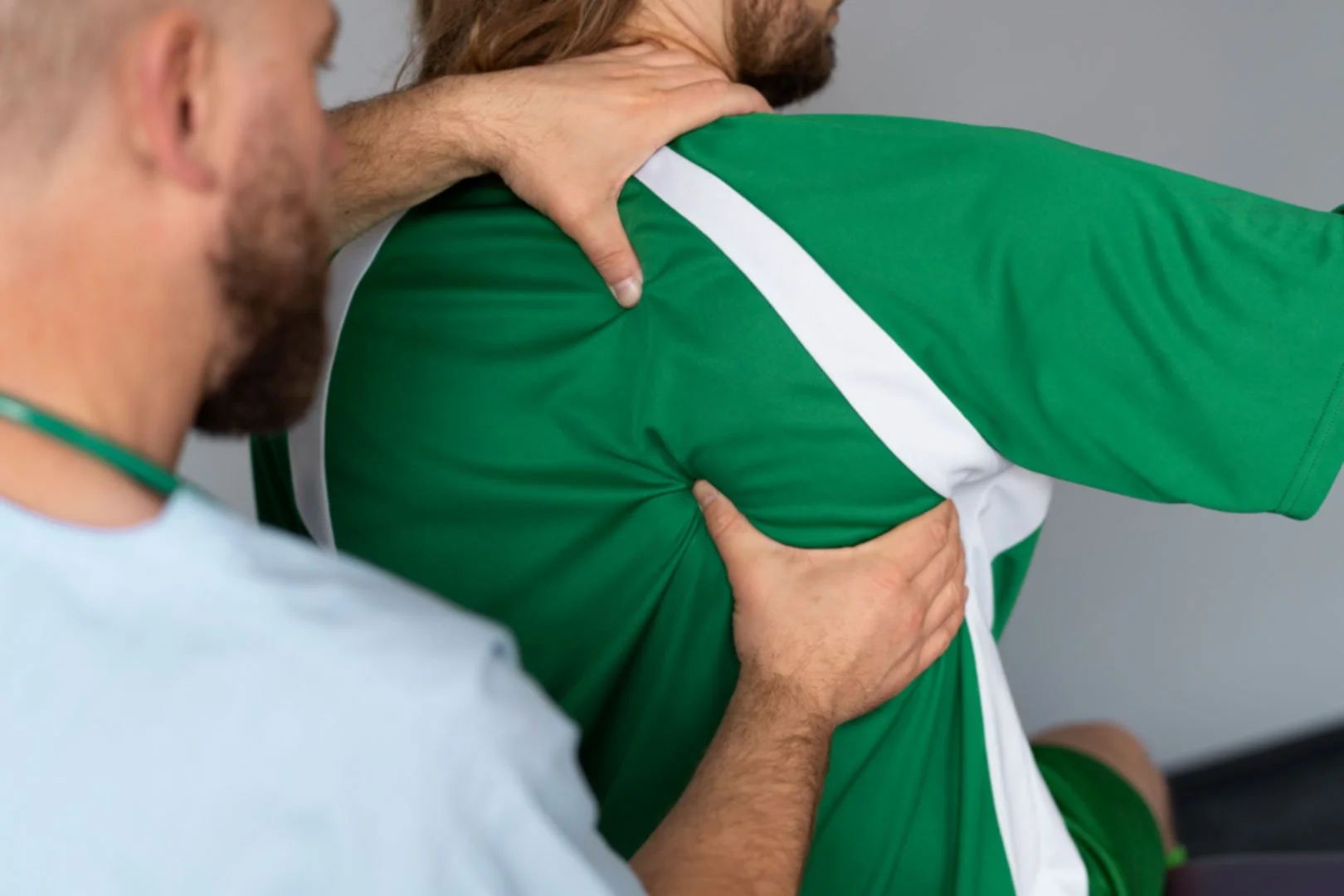
• Manual therapy to release restricted soft tissue and improve joint glide
• Neuromuscular re-education to restore scapular rhythm
• Strengthening exercises targeting rotator cuff and scapular stabilizers
• Nerve mobilization (if symptoms suggest neural involvement)
• Sport-specific or lifestyle-specific movement retraining
• Real-time feedback and form correction in our training space
You’ll also be supported by Victory’s exercise app, which includes video demos, rep tracking, and progression guidance to reinforce progress between visits.
Backed by Research, Built for Results
We don’t guess. Victory’s shoulder rehab protocols are grounded in peer-reviewed research and years of clinical application.
• Scapular-focused rehab and rotator cuff strengthening significantly improve pain and function in non-traumatic shoulder conditions (Ratcliffe et al., 2020, JOSPT)
• Manual therapy combined with exercise shows greater improvement than exercise alone in subacromial impingement (Desmeules et al., 2015, Arch Phys Med Rehabil)
• Progressive loading is essential in tendon rehab, including rotator cuff pathologies (Cook & Purdam, 2009, Br J Sports Med)
And unlike clinics that run patients through generic routines, we build every phase of your program around your goals, workload, and response to care.How We Support Active Adults in Culver City
Whether you’re training at a local gym, chasing your next volleyball tournament, or just trying to sleep on your side again—your shoulder shouldn’t get in the way.
We work with:
• Runners and lifters at gyms like Paradiso CrossFit and Sandbox Fitness
• Tech workers battling posture-related tension from long workdays
• Yogis navigating shoulder instability in Down Dog and plank poses
• Volleyball, pickleball, and tennis players managing overhead volume
• Parents and professionals struggling with lifting, carrying, or desk ergonomics
Culver City is full of people who move—and we help them move smarter.
Shoulder Pain Isn’t Always From the Shoulder
Many of the shoulder issues we treat don’t start there. We often find that limited thoracic spine mobility, neck stiffness, or hip and core instability contribute to compensation patterns that overload the shoulder.
Victory’s integrated approach means we don’t stop at the symptom—we solve the movement puzzle. That’s why our outcomes stick.
Why Victory Is Different
Most clinics either treat pain or train movement—but not both. At Victory Performance and Physical Therapy, we combine physical therapy and personal training under one roof to create a complete solution.
That means:
• You can move from rehab to training without starting over
• Our team collaborates daily to progress your care in real time
• You’re never handed off to someone who doesn’t understand your history
• We modify—not pause—your training goals
Shoulder pain doesn’t have to mean time off. With the right guidance, it can be the start of better performance.
Ready to Solve Your Shoulder Pain?
Victory Performance and Physical Therapy in Culver City offers expert evaluation, research-backed rehab, and personalized support to help you feel strong again.
If your shoulder is keeping you from lifting, sleeping, working, or enjoying the things you love—don’t wait for it to get worse.
Let’s build a smarter plan together.
