
What to Expect at Your First Physical Therapy Visit in Culver City
Your first physical therapy visit can feel like a mystery if you have never been before. What will the therapist do? Will it hurt? How long does it take? What should you wear?
These are normal questions. And knowing what to expect beforehand makes the experience easier and more productive. This post walks you through every step of a first visit at our physical therapy clinic in Culver City, from what to bring to what you will leave with.
What Happens Before You Even Walk In?
Most of the prep work happens before your appointment.
Many clinics send intake forms ahead of time. These forms ask about your medical history, current symptoms, medications, past surgeries, and your activity level. Filling these out before your appointment saves time and gives your therapist a head start on understanding your situation.
If you are coming through California's Direct Access law, you don't need a referral. You can learn more about direct access physical therapy in California here.
What to bring:
A photo ID
Any imaging results you have (X-rays, MRI reports)
A list of current medications
Your completed intake forms
What to wear: Comfortable clothing you can move in. Athletic shorts, leggings, or joggers work well. If your issue involves your shoulder or upper body, a tank top or t-shirt is helpful. Avoid jeans, dress clothes, or anything that limits your range of motion. You don't need to bring gym shoes unless the clinic asks you to.
How Long Does a First Physical Therapy Visit Take?
Plan for about 60 minutes for your initial evaluation. Some clinics book 45 minutes, others book 75. At Victory Performance and Physical Therapy in Culver City, initial evaluations are designed to be thorough, so you won't feel rushed and the appointment is between 60-90 minutes.
This is longer than a typical follow-up visit, which usually runs 25 to 55 minutes. The extra time on your first visit allows your therapist to do a complete assessment, explain what they find, and start treatment.
What Does the Physical Therapist Ask You?
Your evaluation starts with a conversation. Your therapist will ask detailed questions about your condition. This is called the subjective exam, and it's one of the most important parts of the visit.
Expect questions like:
Where exactly is your pain or discomfort?
When did it start, and was there a specific event that caused it?
What makes it better? What makes it worse?
How does it affect your daily life, your work, and your training?
What have you tried so far (rest, ice, stretching, medication)?
What are your goals for treatment?
That last question matters more than people realize. Research shows that patients who clearly define their goals and expectations at the start of physical therapy are more likely to have successful outcomes. A study in Health and Quality of Life Outcomes found that patients whose treatment expectations were discussed early were better positioned to achieve meaningful clinical improvement (Zeppieri et al., 2017). Link to study
Your answers to these questions shape everything that follows. A runner training for the LA Marathon has different goals than a desk worker who just wants to sit without back pain. Your therapist needs to understand your life, not just your symptoms.
What Does the Physical Exam Include?
After the conversation, your therapist moves into the objective exam. This is the hands-on portion where they assess how your body is actually moving and functioning.
The specific tests depend on your condition, but a thorough evaluation for an active adult typically includes:
Observation. Your therapist looks at your posture, how you stand, and how you hold your body. Sometimes the way you carry yourself reveals patterns that contribute to pain.
Range of motion testing. They measure how far your joints move. This can be active (you move on your own) or passive (your therapist moves you). Comparing sides helps identify restrictions.
Strength testing. Your therapist tests the strength of specific muscle groups related to your problem area. Weakness in one area often contributes to pain somewhere else. For example, hip weakness is a common driver of knee pain in runners.
Special tests. These are clinical tests designed to stress specific structures like ligaments, tendons, or joints. They help narrow down the source of your symptoms. For a shoulder issue, this might involve tests for rotator cuff integrity or impingement (a condition where tendons get pinched during overhead movement). For a knee issue, it might involve tests for meniscus or ligament stability.
Movement screening. Your therapist watches you perform functional movements relevant to your activities. If you're a runner, they may watch you squat, lunge, or even run on a treadmill. If you lift weights, they may have you demonstrate a deadlift or overhead press pattern. This helps identify movement faults that contribute to your pain.
Palpation. Your therapist uses their hands to feel the tissues around your problem area. Palpation means pressing on muscles, tendons, and joints to identify areas of tenderness, swelling, tightness, or abnormal texture. This is a skilled assessment, not just poking around.
None of these tests should cause lasting pain. Your therapist will tell you what they're doing and why. If something is uncomfortable, let them know. The goal is to gather information, not push you through pain.

Will You Get a Diagnosis on Your First Visit?
A licensed physical therapist with a Doctor of Physical Therapy (DPT) degree is trained to give you a provisional diagnosis of most musculoskeletal conditions. By the end of your first visit, your therapist should be able to tell you:
What they believe is causing your pain or limitation
Why it's happening (the root cause, not just the symptom)
What the treatment plan will include
How many visits they expect you will need
What you can do at home between visits
This clarity is important. Research published in Physical Therapy shows that patients who understand their condition and have clear expectations about their treatment plan report better outcomes and higher satisfaction with care (Bialosky et al., 2010). Link to study
If your therapist identifies anything during the evaluation that falls outside the scope of physical therapy, they will refer you to the appropriate medical provider. This screening is built into every evaluation, especially for patients coming in through direct access.
Have questions about what your first visit will look like? Our team at Victory Performance and Physical Therapy is happy to walk you through the process before you come in. Call us: 424-543-4336
Will You Receive Treatment on Your First Visit?
At many clinics, yes. A good physical therapy evaluation doesn't end with just an assessment. Most therapists begin hands-on treatment during the same session.
This might include:
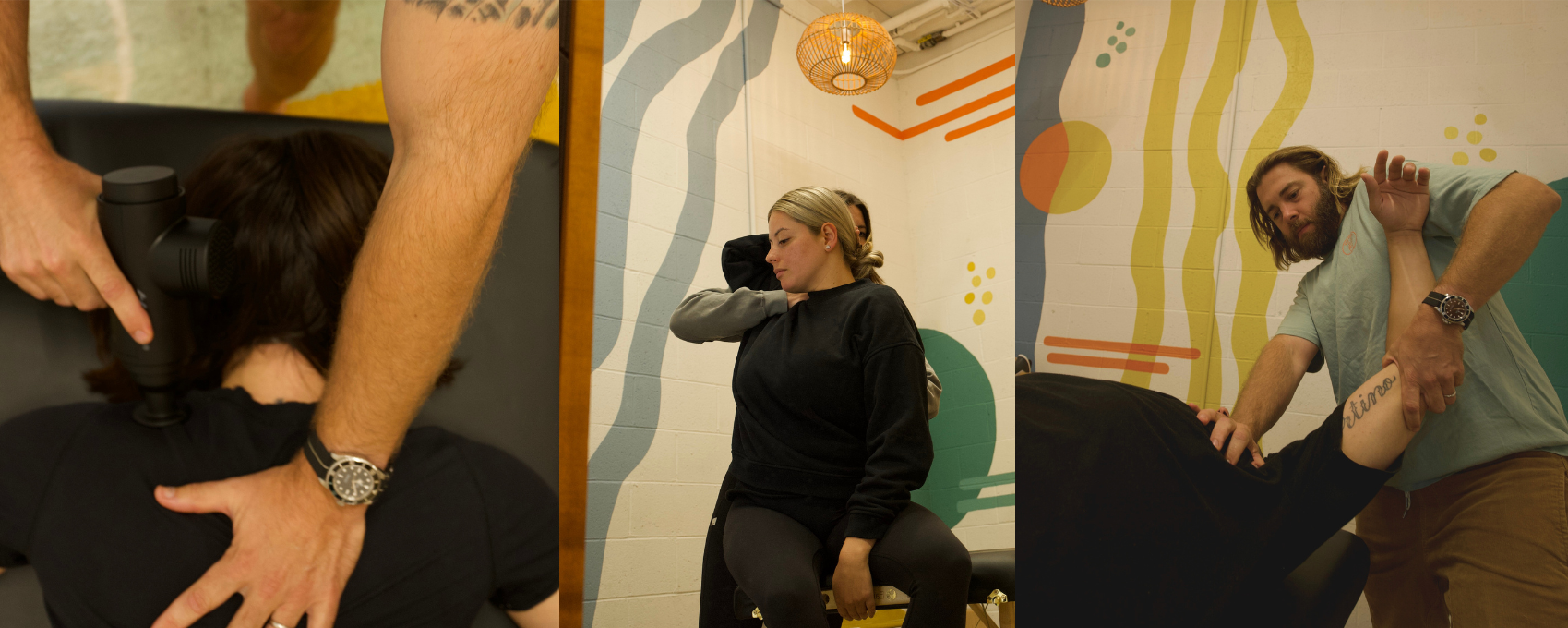
Manual therapy. Your therapist uses their hands to mobilize joints, release tight muscles, or improve tissue mobility. This can provide immediate relief and helps your therapist confirm their findings from the evaluation.
Initial exercises. You will likely perform 2 to 4 exercises during your first visit. These are selected based on what the evaluation revealed. Your therapist will teach you proper form and explain why each exercise matters.
Home exercise program. Before you leave, you will receive a set of exercises to do between visits. These are tailored to your specific condition and goals. Most home programs take 10 to 15 minutes per day.
Starting treatment on day one matters. A systematic review in the Journal of Orthopaedic and Sports Physical Therapy found that early initiation of physical therapy was associated with lower overall healthcare costs, fewer opioid prescriptions, and reduced need for advanced imaging and surgery (Ojha et al., 2016, JOSPT). Link to study
The sooner you start working on the problem, the faster you tend to see results.
What Should You Expect After Your First Visit?
It's normal to feel a little sore after your first evaluation. Your therapist tested your body in ways it may not be used to, and some of the treatment techniques can cause temporary soreness, similar to what you'd feel after a new workout.
This should be mild and resolve within 24 to 48 hours. If anything feels significantly worse, call your therapist. That feedback helps them adjust the plan.
After your first visit, you should feel like you understand your condition, know the plan, and have clear next steps. If you leave confused or without answers, that's a red flag about the quality of care.

How Do You Know If the Clinic Is the Right Fit?
Your first visit is also your chance to evaluate the clinic. Pay attention to these things:
Did your therapist listen? A good evaluation is a conversation, not a checklist. If your therapist rushed through questions or didn't ask about your goals, that's a concern.
Were you treated one-on-one? Some clinics have therapists juggling 3 or 4 patients at a time, with aides doing most of the hands-on work. At a clinic like Victory Performance and Physical Therapy, you work directly with your physical therapist in Culver City for the entire session.
Did you leave with a clear plan? You should know your diagnosis, your treatment goals, how many visits are recommended, and what to do at home. If you left without this, ask for clarification at your next visit.
Did they explain everything? Your therapist should explain every test, every finding, and every exercise. If something doesn't make sense, ask. A good PT welcomes your questions.
For more on what to look for in a physical therapist, read our guide on how to choose a physical therapist in Culver City.
Real Patients, Real Results
David L. had been dealing with a nagging hamstring issue for months. He put off seeing a PT because he wasn't sure what the process involved. When he finally came in for his first visit at Victory, his evaluation revealed that his hamstring pain was actually driven by poor hip stability and lumbar motor control. He left that first visit with a clear explanation, hands-on treatment that immediately reduced his symptoms, and a 3-exercise home program.
"I wish I hadn't waited so long. The eval was the most thorough assessment I've ever had. I knew exactly what was wrong and what we were going to do about it."
Rachel K. came in from Mar Vista with chronic shoulder pain that had been limiting her CrossFit training for weeks. She was nervous about her first visit because a previous experience at another clinic had been rushed and impersonal. At Victory, her therapist spent the full hour with her, tested her shoulder through every relevant movement, and identified a scapular dyskinesis pattern (an abnormal movement of the shoulder blade that affects how the shoulder joint functions). Treatment started that same day.
"It was completely different from what I'd experienced before. My therapist actually listened, explained everything, and I could already feel a difference by the time I left."
A Quick Summary of Your First PT Visit
You fill out intake forms before you arrive
You wear comfortable, movable clothing
You plan for about 60 minutes
Your therapist asks detailed questions about your symptoms, history, and goals
You go through a hands-on physical exam including movement, strength, and special tests
You receive a diagnosis and a clear treatment plan
Most clinics start hands-on treatment during the first visit
You leave with a home exercise program
Ready to Schedule Your First Visit?
If you've been putting off physical therapy because you weren't sure what to expect, now you know. At Victory Performance and Physical Therapy, we provide thorough, one-on-one evaluations designed for active adults. Our Doctors of Physical Therapy specialize in helping runners, lifters, CrossFit athletes, and everyday active people throughout Culver City and the surrounding neighborhoods get back to doing what they love.
No referral needed under California's Direct Access law. Just call and schedule.
Book Your Evaluation Now Call: 424-543-4336 Serving Culver City, Playa Vista, West Los Angeles, Palms, Marina del Rey, and Westchester.
References
Zeppieri, G., Lentz, T. A., Atchison, J. W., Indelicato, P. A., Moser, M. W., Vincent, K. R., and George, S. Z. (2017). Patient-Defined Desired Outcome, Success Criteria, and Expectation in Outpatient Physical Therapy: A Longitudinal Assessment. Health and Quality of Life Outcomes, 15(1), 29.https://hqlo.biomedcentral.com/articles/10.1186/s12955-017-0604-1
Bialosky, J. E., Bishop, M. D., and Cleland, J. A. (2010). Individual Expectation: An Overlooked, but Pertinent, Factor in the Treatment of Individuals Experiencing Musculoskeletal Pain. Physical Therapy, 90(9), 1345-1355.https://pmc.ncbi.nlm.nih.gov/articles/PMC2931638/
Ojha, H. A., Wyrsta, N. J., Davenport, T. E., Egan, W. E., and Gellhorn, A. C. (2016). Timing of Physical Therapy Initiation for Nonsurgical Management of Musculoskeletal Disorders and Effects on Patient Outcomes: A Systematic Review. Journal of Orthopaedic and Sports Physical Therapy, 46(2), 56-70. https://www.jospt.org/doi/10.2519/jospt.2016.6138
