
What Every Runner Should Know About Shockwave Therapy
If you have been running consistently for any length of time, you have probably dealt with at least one injury that put you on the sideline longer than you expected. The Achilles that flared up six weeks before a race. The shin pain that showed up every time mileage climbed above a certain threshold. The heel that made the first steps out of bed genuinely unpleasant. You rest, it calms down, you go back to training, and somewhere in the back of your mind you are already waiting for it to return.
At Victory Performance and Physical Therapy in Culver City, a significant part of our patient base is made up of runners. LA Marathon athletes, Ballona Creek regulars, people training for their first 10K and veterans chasing a Boston qualifier. What they have in common is not the injury. It is the experience of trying to manage something that keeps recurring without ever really understanding why.
Shockwave therapy is one of the tools we use most consistently with this population, and most runners have never heard of it until they are already frustrated enough to try something new. This post is for those runners, and for the ones who want to understand their options before they get to that point.
✅ Key Takeaways
Runners are among the highest-risk groups for the tendon and bone stress injuries where shockwave therapy has the strongest evidence
The first systematic review focused specifically on athletes found ESWT facilitates return to sport across multiple running-related conditions with an excellent safety profile
At Victory PT, shockwave therapy is always part of a complete DPT-supervised plan, not a standalone session
The conditions most relevant to runners include Achilles tendinopathy, shin splints, plantar fasciitis, and patellar tendinopathy
No referral needed under California's Direct Access law
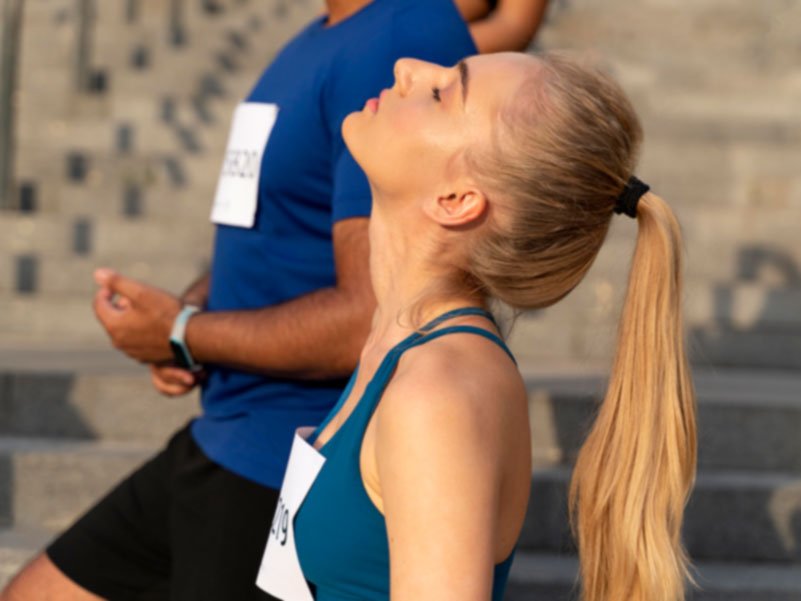
Why Runners Keep Getting Injured
Running is a repetitive loading activity. Every stride produces a ground reaction force of roughly two to three times body weight through the lower limb. Multiply that across a typical training week and the cumulative load on tendons, fascia, and bone is enormous.
The body adapts well to this load when training is progressed gradually and recovery is adequate. The injuries happen in the gaps between what the training demands and what the tissue can currently handle.
These gaps open up in predictable ways:
Mileage increases too quickly after a rest period or an easy training block
A hard training cycle runs into insufficient sleep, stress, or nutrition that compromises recovery
A mechanical issue like limited hip strength, restricted ankle mobility, or a subtle gait pattern quietly overloads one structure more than others
Age-related changes in tendon elasticity mean tissue that handled a certain load at 30 requires more preparation and recovery at 45
The result is the specific injuries runners deal with over and over. And because these injuries are load-related rather than traumatic, they tend to respond poorly to pure rest and well to the right kind of progressive management. This is the context in which shockwave therapy, used correctly alongside physical therapy, makes the most sense.
What Shockwave Therapy Is and How It Works
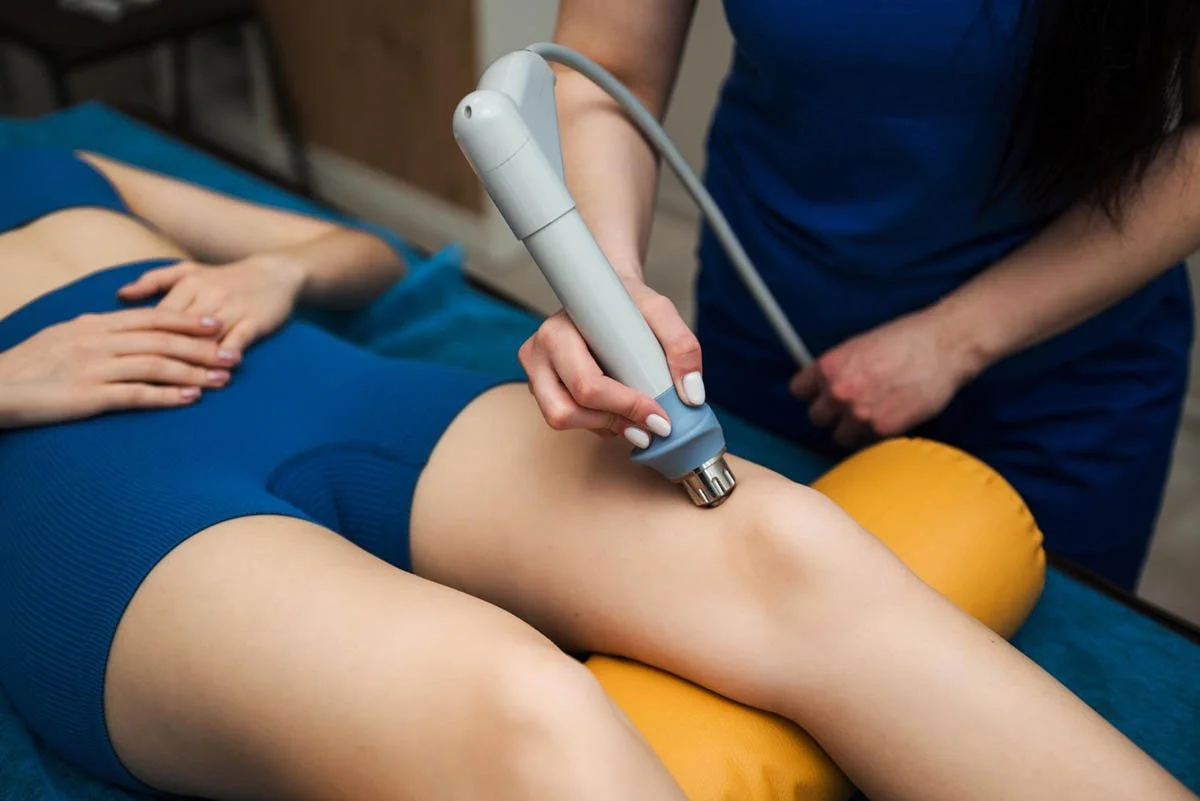
Extracorporeal shockwave therapy, or ESWT, delivers focused acoustic pulses to a targeted area of injured tissue. The mechanical energy from those pulses triggers a biological repair response called mechanotransduction, stimulating cellular activity, promoting collagen remodeling, encouraging new blood vessel formation, and in the case of bone stress injuries, activating the cells responsible for bone remodeling.
In plain language: it creates the stimulus that chronically degenerated or overloaded tissue needs to actually repair, rather than staying stuck in a cycle of partial healing and re-injury.
At Victory, shockwave sessions run 10 to 15 minutes. They are performed by your Doctor of Physical Therapy as part of a broader treatment session. Most running-related protocols involve 5 to 10 sessions spaced approximately one week apart. You can typically resume normal daily activity immediately after a session, and most people maintain a modified training load throughout the treatment course rather than stopping completely.
The treatment is not a magic fix and we do not present it as one. It works best when it is part of a plan that also addresses the loading patterns and contributing factors that drove the injury. At Victory, that is always how we use it.
What the Research Says About Shockwave Therapy in Runners and Athletes
The most relevant body of evidence for the running population comes from a systematic review published in the British Journal of Sports Medicine that was specifically designed to address a gap in the research. Previous reviews had pooled athletes and non-athletes together. This review, conducted by researchers at Spaulding Rehabilitation and published in 2023, was the first to examine ESWT exclusively in athletes, physically active individuals with sports-type injuries, and people in physically demanding occupations. (Rhim, Tenforde et al., 2023)
The findings are worth understanding directly:
ESWT alone or combined with exercise facilitates return to sport or activity across multiple conditions
The safety profile of shockwave therapy is excellent, with the most common side effects being temporary redness and soreness at the treatment site
ESWT may be considered an initial treatment option for plantar fasciitis, lateral epicondylitis, non-insertional Achilles tendinopathy, and proximal hamstring tendinopathy in athletes
MTSS was identified as a condition where ESWT may also be considered
The procedure was well tolerated in both young athletes and adults
For runners specifically, the conditions covered in that review represent the most common reasons people come through our door at Victory. This is not a treatment developed for sedentary populations that has been adapted for athletes. The evidence base in the literature now includes research specifically in people who need to get back to training.
The Running Injuries We Treat With Shockwave Therapy at Victory
Achilles Tendinopathy
The most common tendon injury in runners, affecting up to 18% of the running population and carrying a 52% lifetime incidence in former endurance runners. Mid-portion Achilles tendinopathy in particular has strong evidence supporting the combination of a loading program and shockwave therapy, especially in cases that have not responded to loading alone or where a race deadline makes recovery timelines important.
We cover Achilles tendinopathy in detail in our dedicated post: What Active Adults Need to Know About Achilles Tendinitis and Shockwave Therapy.
Plantar Fasciitis
Plantar fasciitis accounts for roughly 8% of all running injuries and is one of the conditions where shockwave therapy has the most well-established evidence base. The morning heel pain, the sharp sensation at the first steps of a run, the way it affects every mile when it is at its worst. ESWT is considered a strong option for plantar fasciitis that has not responded to stretching and conservative management.
We have a dedicated post on shockwave therapy for plantar fasciitis here: Shockwave Therapy for Plantar Fasciitis.
Shin Splints (Medial Tibial Stress Syndrome)
One of the most disruptive injuries for runners building mileage, and one of the most commonly mismanaged through repeated rest-and-return cycles that never address the underlying load and mechanical factors. The research on shockwave therapy for MTSS is promising, with systematic reviews finding reduced pain and shorter time to recovery with ESWT across included studies. Importantly, a tibial stress fracture must always be ruled out before shockwave therapy is used for shin pain.
Our full post on shin splints is here: Why Shin Splints Keep Derailing Your Training and What to Do About It.
Patellar Tendinopathy
Less common in road runners than in jumping athletes, but relevant in runners who do significant hill training, trail running, or incorporate plyometric work into their program. The Culver City Stairs and Baldwin Hills routes create meaningful eccentric knee load that can stress the patellar tendon over time. Shockwave therapy is included in evidence-based guidelines for patellar tendinopathy management, and at Victory we assess and treat this as part of our broader running injury caseload.
Why Most Runners Do Not Discover Shockwave Therapy Until They Are Already Frustrated
This is something we hear regularly at Victory. A runner comes in after months of managing an injury on their own, trying rest, trying stretching, maybe trying a cortisone injection that worked for a while. Shockwave therapy is not the first thing anyone mentions to them because it sits outside the typical pathway of GP referral to physiotherapy to injection to imaging.
The runners who find their way to Victory and to ESWT earlier in that process tend to have better outcomes, simply because chronic tendinopathy and bone stress injuries become harder to resolve the longer they have been present. Tissue that has been degenerating for six months requires more work to turn around than tissue that has been symptomatic for six weeks.
California's Direct Access law means you do not need a referral to come to us. You can call or book online and come in for a proper assessment without first going through a physician referral process. For runners with a training goal or a race on the calendar, that directness matters.
How We Work With Runners at Victory
Every runner who comes to Victory starts with a comprehensive assessment by one of our licensed Doctors of Physical Therapy. For running-related injuries, that means we are not just looking at where it hurts. We are looking at:
The specific tissue involved and the current stage of the injury
Hip and glute strength and how it affects lower limb mechanics under load
Ankle mobility and calf strength and their role in distributing impact forces
Training history, recent load increases, and recovery patterns
Running mechanics when relevant, particularly for recurrent injuries with a clear pattern
Whether imaging is needed to rule out stress fractures or confirm a clinical diagnosis
That assessment determines everything. The loading program, the manual therapy, whether shockwave therapy is appropriate and when to introduce it, and the return-to-running plan that accounts for what you are actually training for.
We do not give everyone the same program. We build programs around what we find and around what matters to the person in front of us, whether that is finishing their first half marathon or getting back to the weekly long run that keeps the rest of their life working.
If you are a runner in Culver City dealing with an injury that keeps coming back, or you want to get ahead of problems before they derail your next training cycle, our Doctors of Physical Therapy at Victory Performance and Physical Therapy are ready to help.
📞 Call or text: 424-543-4336 📅Book online at victoryperformancept.com
No referral needed. Come straight to us.
What Victory Runners Have Experienced
The running community in Culver City and the broader LA area is a meaningful part of why we do this work. Hearing from patients who came in uncertain and left ready to train is the best measure of whether what we do actually works.
Will Murphy came to Victory with a chronic calf injury during marathon training, unsure whether he would make the start line.
"CJ created a plan that not only addressed my pain but focused on long-term strength and mobility to improve my performance overall. His understanding of endurance athletes is top-tier, and he always took time to explain the purpose behind each exercise and adjustment. The combination of expert manual therapy, thoughtful progressions, and genuine care made a huge difference in my recovery."
Andria Alvarez came in during LA Marathon prep with knee issues that were threatening to end her training cycle entirely.
"Kyle was always reassessing our sessions and my at home workouts to make sure I got what I needed. Kyle and the Victory team were out there supporting everyone at the LA Marathon, and when I passed them by at Mile 20, we cheered and hugged and celebrated. The support in and out of our PT sessions is priceless."
Taylor P. Miller came to us with an ankle injury two weeks before her marathon.
"I would not have been able to cross the finish line or even the starting line without Victory Performance. They worked with me not only in the studio, but they also gave me daily exercises that I could do at home to help get me back in the right shape."
Johnny Huerta came in after the LA Marathon managing post-race tightness and an ongoing shoulder issue while also living with Parkinson's disease.
"My Victory experience has been nothing short of spectacular! Zyan is amazing. Very knowledgeable and also very kind and personable. She has really helped loosen up a tight shoulder as well as post running hamstring and muscle tightness. The Victory team is awesome. Family-like vibe."
These are not exceptional stories. They are representative of the runners we work with every week.

Ready to Train Without the Recurring Injury Cycle?
At Victory Performance and Physical Therapy in Culver City, we have helped hundreds of runners work through the injuries that were keeping them from the training they cared about. Shockwave therapy is one of the tools that makes the difference in cases that have not responded to rest and standard rehabilitation alone, and the evidence base specifically in athletes continues to grow.
If you are training in Culver City, logging miles on the Ballona Creek path, grinding up the Culver City Stairs, or building toward the LA Marathon, and you have an injury that has been hanging around longer than it should, come and see us. The assessment is where everything starts.
📅Book your appointment at victoryperformancept.com
📞 Call or text: 424-543-4336
Victory Performance and Physical Therapy | Culver City, CA | Serving active adults and athletes since 2015
